
So, blood draws make you nervous.
Not just “I don’t love this” nervous. More like your palms start sweating, your stomach tightens, you look away the second the supplies come out, and part of you wants to cancel the appointment altogether.
If that sounds familiar, you’re not alone.
A lot of people feel anxious before blood work. Some worry about the needle. Some worry about fainting. Some had one bad experience years ago and their body still remembers it. And for others, it’s not even the needle as much as the whole setting — the waiting room, the clinic smell, the bright lights, the feeling of being rushed.
The good news? A blood draw is usually quick. And with the right preparation, it can feel a lot more manageable.
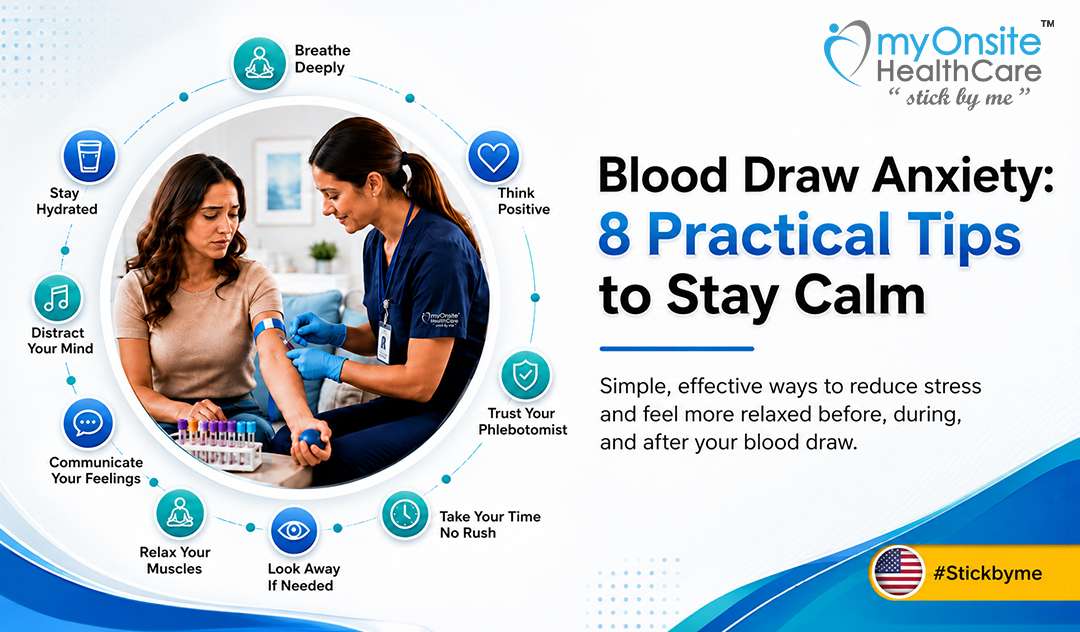
Here are 8 practical ways to stay calm before and during your next blood draw.
How Do You Calm Anxiety Before a Blood Draw?
If you feel anxious before a blood draw, tell the phlebotomist early, look away from the needle, use slow breathing, stay hydrated if your test allows it, keep your arm warm, and ask to sit or lie down if you have fainted before.
For people who feel more stressed in clinics or waiting rooms, a home blood draw may also make the experience easier because testing can happen in a familiar, more comfortable space.
What Is Blood Drawing Anxiety?
Blood draw anxiety is the fear, stress, or nervousness someone feels before or during a blood test. It can be mild, like feeling tense or uneasy, or more intense, like feeling dizzy, nauseous, panicked, or afraid you might faint.
Some people call it needle fear. Others may know it as needle phobia or trypanophobia. But you don’t need a formal name for it to be real.
Blood draw anxiety can show up as:
- Sweaty palms
- Racing heart
- Shaky hands
- Nausea
- Dizziness
- Lightheadedness
- Trouble sitting still
- Feeling like you want to leave
- Avoiding blood work completely
That last one is important. When fear keeps someone from getting needed lab work, it can delay answers, treatment, or routine monitoring.
Needle fear is also more common than people think. A review available through the National Library of Medicine found that needle fear affects many children and a meaningful number of adults too, with some adults avoiding medical care because of it. You can read more about needle fear and its impact on care from this NIH-hosted research article.
Why Do Blood Draws Make Some People So Nervous?
There isn’t one single reason.
For some people, it’s the needle itself. For others, it’s the fear of pain, the sight of blood, or the worry that something will go wrong.
A few common causes include:
- Fear of needles
- Fear of seeing blood
- A difficult blood draw in the past
- Worry about fainting
- Sensitive veins or hard-to-find veins
- Medical anxiety
- Feeling embarrassed about being nervous
- Worry about the test results
- Feeling out of control during the appointment
That part might surprise you — sometimes the anxiety is not really about pain. It’s about anticipation.
The waiting can feel worse than the actual blood draw.
And if you’ve ever fainted or almost fainted during blood work, your body may start reacting before the needle even comes out. The National Institute of Neurological Disorders and Stroke explains that vasovagal syncope, a common type of fainting, can happen when the body reacts to triggers like fear, pain, dehydration, or seeing blood.
So if blood draws make you feel lightheaded, you’re not being dramatic. Your body may genuinely be reacting to stress.
If this has happened to you before, you may also want to read Why Do Some People Faint During Blood Draws — And How To Stop It. It goes deeper into why fainting happens and how to reduce the risk.
8 Practical Tips to Stay Calm During a Blood Draw
1. Tell the Phlebotomist You’re Nervous
This is probably the simplest tip, but people skip it all the time.
Maybe they feel embarrassed. Maybe they don’t want to seem difficult. Maybe they think, “I’m an adult, I should be fine.”
But honestly, telling the phlebotomist is one of the best things you can do.
A good phlebotomist has heard this before. Many times. You are not the first nervous patient they’ve helped, and you definitely won’t be the last.
You can say something simple:
“I get anxious during blood draws.”
“I might feel faint.”
“I don’t want to see the needle.”
“Can you talk me through it?”
“Can I sit for a minute before we start?”
That one sentence gives the phlebotomist a chance to help you. They may slow down, explain what they’re doing, help distract you, or make sure you’re sitting safely.
At myOnsite Healthcare, this kind of patient-centered care matters. Many patients who use mobile phlebotomy services are older adults, people with mobility challenges, patients managing chronic conditions, or people who simply feel more comfortable having lab work done at home.
Want to skip the clinic and get blood work done at home?
2. Don’t Watch the Needle If It Makes You Feel Worse
Some people like to watch everything.
Most anxious people do not.
If seeing the needle makes your stomach drop, look away before the supplies even come out. Focus on your phone, look out a window, stare at something across the room, or close your eyes if that helps.
There is no rule that says you have to watch.
Actually, for a lot of people, not watching is half the battle. The anticipation can feel worse than the blood draw itself.
A small trick: turn your head away before the tourniquet goes on. That way your body is not already tensing up by the time the needle is involved.
You can also ask the phlebotomist not to announce every step. Some people like knowing what’s happening. Others would rather hear, “All done,” and nothing else.
Both are okay.
3. Use Slow Breathing Before and During the Draw
When anxiety kicks in, your breathing usually gets shallow. You might not even notice it.
Then your chest feels tight. Your shoulders tense. Your heart beats faster. And suddenly the whole thing feels bigger than it is.
Try this:
Breathe in through your nose for 4 seconds.
Hold for 1 second.
Breathe out slowly for 6 seconds.
Do that a few times before and during the draw.
The goal is not perfect breathing. The goal is to make your exhale longer than your inhale. That sends your body a quiet signal that you are safe.
You can also try grounding yourself while breathing. For example, press your feet into the floor and notice the chair supporting you. It sounds small, but it gives your brain something steady to focus on.
4. Ask to Sit or Lie Down If You’ve Fainted Before
If you have ever fainted, almost fainted, or felt dizzy during a blood draw, say that before the appointment starts.
This matters.
Some people have a vasovagal response during blood draws. That means the body reacts to a trigger — like fear, pain, or seeing blood — and blood pressure or heart rate may drop. That can lead to sweating, nausea, dizziness, or fainting.
If that has happened to you, ask if you can lie down or recline during the blood draw. Even sitting with your feet supported can help.
Please don’t try to “tough it out.” It is much safer to speak up early than to wait until you feel like you might pass out.
The World Health Organization’s phlebotomy guidance, available through CDC Stacks, notes that patient safety matters during blood collection and that fainting can be one possible patient reaction during phlebotomy. You can review the guidance on best practices in phlebotomy.
5. Bring a Distraction
Distraction works better than people think. Your brain has a harder time panicking when it’s busy doing something else.
You can:
- Listen to music
- Watch a short video
- Text a friend
- Count backward from 100
- Hold a stress ball
- Talk about something unrelated
- Focus on your feet touching the floor
- Name five things you can see in the room
Some people want the phlebotomist to keep talking. Some want silence. Some want to know each step. Some want no details at all.
There’s no “right” way to get through it. There’s only what works for you.
A simple line like, “Can you keep talking to me while you do it?” can make the moment feel less intense.
6. Hydrate Before Your Appointment, Unless You Were Told Not To
If your test instructions allow water, drink some before your appointment.
Not an extreme amount. You don’t need to overdo it. Just try not to show up dehydrated.
Hydration may help make your veins easier to find, and when the draw goes smoothly, anxiety usually drops too.
Try drinking water the day before and the morning of your blood draw. If you’re fasting, check your test instructions. Many fasting blood tests still allow water, but always follow the directions from your doctor or lab.
If you’re not sure what you should eat or drink before testing, read What to Eat and Avoid Before a Blood Test before your appointment.
And if finding a vein has been hard in the past, these tips on how to make veins bigger before a blood draw may help you prepare.
7. Keep Your Arm Warm
Cold can make veins less noticeable. And when a blood draw takes longer than expected, nervous people often get more nervous.
A simple fix: keep your body and arms warm before the appointment.
Wear layers. Choose sleeves that are easy to roll up. If you’re at home, stay in a comfortable room. Some people also use a warm compress on the arm for a few minutes before the draw, as long as there’s no medical reason not to.
This is not magic, but it can help make the process easier.
And easier usually means calmer.
For more small ways to make the appointment smoother, you can also read Tips for an Easier Blood Draw.
8. Consider a Home Blood Draw If Clinics Make Anxiety Worse
For some people, the needle is only part of the problem.
The rest is everything around it.
The drive.
The parking.
The waiting room.
The clinic smells.
The noise.
The feeling of being rushed.
The worry that everyone is watching.
If that sounds familiar, a home blood draw may be a much better fit.
With mobile phlebotomy, a trained professional comes to you. You can stay in your own space, sit in your own chair, have a family member nearby, and avoid the extra stress of traveling to a lab.
This can be especially helpful for:
- Older adults
- People with mobility challenges
- Patients with chronic conditions
- People who need frequent blood work
- Caregivers helping a loved one
- Patients who feel anxious in medical settings
- People who have had difficult blood draw experiences before
At myOnsite Healthcare, the goal is not just to collect a sample. It’s to make lab testing more accessible, more comfortable, and more patient-centered.
myOnsite supports patients nationwide with licensed, insured, employee-based mobile phlebotomists and clinical collection services. For many people, having lab testing at home removes the hardest part of the appointment before it even starts.
If traveling to a lab increases your anxiety, learn more about Home Blood Draws or explore our Mobile Phlebotomy Services.
Need lab work without the hassle of traveling to a clinic?
A Simple Plan for Your Next Blood Draw
Anxiety loves uncertainty. So before your next blood draw, make a small plan.
Something like:
“I’ll drink water if allowed, wear comfortable sleeves, tell the phlebotomist I’m nervous, look away, breathe slowly, and sit for a minute before standing up.”
That’s it. Nothing fancy. Just a plan your brain can hold onto.
You may also want to keep a snack nearby for after the appointment, if your test instructions allow it. If you tend to feel lightheaded, don’t jump up right away when it’s over. Give yourself a minute.
Sometimes the best way to stay calm is to stop pretending you’re not nervous and simply prepare for it.
When Blood Draw Anxiety Is More Than Normal Nerves
A little nervousness is common.
But if fear of blood draws causes you to skip important lab work, panic before appointments, or faint often, it may be time to talk with your doctor.
There may be extra ways to help, especially if you have strong needle fear, a history of fainting, or medical anxiety.
Most folks don’t know this at first, but you can ask for support.
You can ask to lie down.
You can ask not to see the needle.
You can ask the phlebotomist to talk with you.
You can ask for a minute before standing up.
You can ask whether a home blood draw is an option.
You’re allowed to need a calmer experience.
Need Lab Work Without the Extra Stress?
If getting to a lab makes blood draw anxiety worse, myOnsite Healthcare can help bring the appointment to you.
Our mobile phlebotomy team helps patients complete blood draws from home, including people with anxiety, mobility challenges, chronic care needs, and busy schedules.
Skip the waiting room and make lab testing feel a little easier.
Ready to make blood work easier?
Frequently Asked Questions
Is blood draw anxiety normal?
Yes, blood draw anxiety is very normal. Some people feel mild nerves, while others feel dizzy, panicked, or afraid they might faint. It does not mean you are weak or overreacting.
What causes anxiety during a blood draw?
It can come from fear of needles, fear of pain, seeing blood, a bad past experience, or worry about fainting. Some people also feel anxious simply because medical settings make them uncomfortable.
How can I calm down before a blood draw?
Tell the phlebotomist you’re nervous, look away from the needle, use slow breathing, and bring a distraction. Drinking water beforehand may also help if your test allows it.
Should I tell the phlebotomist I’m scared?
Yes. This is one of the best things you can do. A trained phlebotomist can help you feel more comfortable, keep you distracted, and make sure you are seated safely.
What if I faint during blood draws?
Tell the phlebotomist before the draw starts. Ask if you can lie down or recline. If fainting happens often, talk with your doctor before future blood work.
Can drinking water make a blood draw easier?
Often, yes, as long as your test instructions allow it. Hydration may help make veins easier to access, which can make the blood draw smoother.
Does looking away really help?
For many people, yes. If seeing the needle increases your anxiety, looking away can lower the stress and make the appointment feel easier.
Is a home blood draw better for anxious patients?
It can be. A home blood draw lets you avoid travel, waiting rooms, and busy lab settings. Many patients feel calmer when lab testing happens in a familiar place.
Can I request a smaller needle?
You can ask. The phlebotomist will decide what is appropriate based on your veins, the test, and the sample requirements.
When should I talk to a doctor about blood draw anxiety?
Talk to your doctor if you avoid needed blood work, have panic symptoms, faint repeatedly, or feel unable to complete lab testing because of fear. There may be safer and more comfortable options available.