
Most people think blood work is simple. You show up, roll up your sleeve, and you’re done.
But here’s the part that surprises people: what you eat, drink, or even do the night before can absolutely change your lab results.
A greasy dinner. Coffee before a fasting test. Dehydration. Even a hard workout the evening before.
All of those things can affect certain readings and sometimes lead to confusing or inaccurate results.
That’s why doctors, labs, and mobile phlebotomists spend so much time talking about preparation. A few small steps beforehand can make a huge difference in how accurate your blood test actually is.
And honestly, nobody wants to repeat lab work because of a breakfast sandwich.
Why Blood Test Preparation Actually Matters
Blood tests measure incredibly sensitive markers inside your body.
Things like:
- Blood sugar
- Cholesterol
- Hormones
- Iron levels
- Kidney function
- Liver enzymes
- Vitamins and minerals
- Inflammation markers
Even temporary lifestyle choices can shift those numbers.
For example, eating a heavy fast-food meal before a cholesterol panel may temporarily raise triglycerides. Not sleeping well can affect cortisol and glucose readings. Dehydration can even make blood draws harder and slower.
That part catches people off guard.
Proper preparation helps:
- Improve test accuracy
- Reduce the risk of false readings
- Prevent repeat appointments
- Help doctors make better treatment decisions
- Make the blood draw easier overall
And if you’re scheduling a home blood draw or using mobile phlebotomy services, preparation matters just as much as it does in a traditional lab.
What Can You Eat Before a Blood Test?
Here’s where people get confused:
Not every blood test requires fasting.
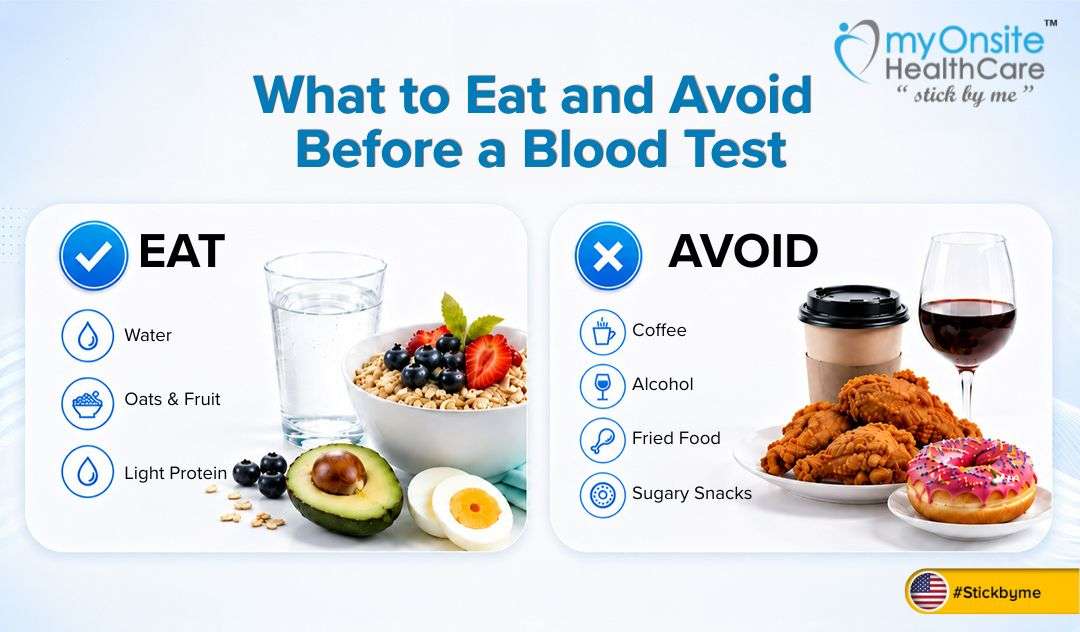
If your provider didn’t specifically tell you to fast, you can usually eat light, healthy foods beforehand.
Healthy Foods That Usually Don’t Affect Blood Work
- Oatmeal
- Eggs
- Whole grain toast
- Yogurt without added sugar
- Fresh fruit
- Brown rice
- Salad
- Lean proteins like chicken or fish
The goal is pretty simple: avoid foods that heavily spike sugar or fat levels right before testing.
A light breakfast is usually much better than grabbing fries and an energy drink on the way to your appointment.
For more fasting guidance, you can also read: How Long Should You Fast Before a Blood Draw?
Foods to Avoid Before Blood Work
Certain foods and drinks are more likely to interfere with lab results, especially before fasting tests.
Foods That May Affect Blood Test Results
Try to avoid:
- Fried foods
- Fast food
- Sugary snacks
- Energy drinks
- Excess caffeine
- Alcohol
- Heavy processed meals
These foods can temporarily impact:
- Blood glucose
- Cholesterol
- Triglycerides
- Inflammatory markers
You’d be surprised how often patients accidentally affect results with something they thought was harmless.
Coffee is a big one.
Can You Drink Coffee Before a Blood Test?
Usually not — at least not for fasting blood work.
Does Black Coffee Break a Fast?
Even black coffee can affect:
- Blood sugar
- Insulin response
- Hormones
- Metabolism markers
So if your doctor says “fasting blood test,” safest option is:
Stick to water only.
That means avoiding:
- Coffee
- Tea
- Creamers
- Sweeteners
- Flavored drinks
- Energy beverages
A lot of patients assume black coffee is fine because it has very few calories. But many providers still recommend avoiding it entirely before fasting labs.
Is Drinking Water Before a Blood Test Okay?
Actually, hydration is one of the best things you can do before blood work.
Most phlebotomists encourage patients to drink water beforehand unless a doctor specifically says otherwise.
Why Hydration Helps During Blood Draws
Proper hydration may help:
- Make veins easier to find
- Improve blood flow
- Reduce dizziness
- Lower the chance of fainting
- Speed up the blood draw process
Proper hydration matters more than many patients realize. In fact, NIH research on hydration and health found that adults who stay well hydrated may experience better long-term health outcomes overall.
From what mobile phlebotomists see every day, hydration alone can completely change how smoothly an appointment goes.
Especially for:
- Seniors
- Patients with small veins
- People prone to difficult blood draws
- Patients receiving regular lab testing at home
A few glasses of water in the hours before your appointment can genuinely help.
For additional hydration tips, check out: How Much Water Should You Drink Before a Blood Draw?
Make Blood Work Easier From Home
Getting to a lab isn’t always simple — especially for seniors, busy professionals, or patients managing chronic conditions.
myOnsite Healthcare offers professional home blood draw services nationwide, bringing licensed mobile phlebotomists directly to your home or care facility.
Instead of sitting in crowded waiting rooms, patients can complete blood work comfortably from home.
Do You Need to Fast Before Blood Work?
Some tests require fasting. Others don’t.
Common Blood Tests That Require Fasting
| Blood Test | Usually Requires Fasting? |
|---|---|
| Glucose Test | Yes |
| Lipid Panel | Yes |
| Cholesterol Test | Yes |
| Basic Metabolic Panel | Sometimes |
| Iron Tests | Sometimes |
According to the CDC cholesterol testing guidelines, fasting may still be recommended for certain lipid and triglyceride tests depending on the patient’s health history.
What “Fasting” Actually Means
- No food for 8–12 hours
- Water is allowed in most cases
- No gum, coffee, tea, or sugary drinks
If you’re unsure, ask your healthcare provider before the appointment.
Skipping fasting instructions can lead to inaccurate results or force you to repeat testing later.
Recent guidance has evolved over time, and Harvard Health notes that fasting before cholesterol testing may not always be necessary for every patient.
Healthy Habits Before a Blood Test
Preparation isn’t just about food.
A few simple habits can improve both your results and your experience.
Get Enough Sleep Before Blood Work
Poor sleep can temporarily affect:
- Blood pressure
- Cortisol
- Glucose
- Stress hormones
Try to get a full night of sleep before your appointment.
Avoid Intense Exercise Before Testing
Heavy workouts right before blood work may temporarily affect:
- Muscle enzymes
- Hydration levels
- Blood sugar
- Hormones
Light activity is usually fine.
But intense gym sessions the night before? Probably not ideal unless your provider says otherwise.
Avoid Alcohol and Smoking
Both can alter several lab values temporarily.
If possible, avoid:
- Smoking
- Vaping
- Alcohol consumption
for at least 24 hours before testing.
Medications and Blood Tests
Never stop prescription medications without medical guidance.
Medications That May Affect Blood Test Results
Always inform your healthcare provider about:
- Prescription medications
- Supplements
- Vitamins
- Herbal products
Certain medications can influence blood test results, especially:
- Diabetes medications
- Steroids
- Hormone therapies
- Blood thinners
If you’re fasting, ask whether medications should still be taken beforehand.
Tips to Make Your Blood Draw Easier
Many people feel nervous before blood work. That’s completely normal.
Simple Ways to Make Blood Draws Easier
- Drink water beforehand
- Wear loose sleeves
- Stay warm
- Relax your arm during the draw
- Let the phlebotomist know if you’ve fainted before
- Don’t hold your breath
For additional tips, read: Tips for an Easier Blood Draw
Why More Patients Are Choosing At-Home Blood Draw Services
Healthcare has changed a lot over the last few years.
Patients want convenience now — especially for routine lab work.
And for many people, getting to a lab isn’t easy.
That might mean:
- Mobility limitations
- Chronic illness
- Transportation issues
- Busy work schedules
- Caregiving responsibilities
- Anxiety around medical settings
That’s one reason mobile phlebotomy and home blood draw services continue growing nationwide.
Instead of sitting in a waiting room, patients can have specimen collection performed at:
- Home
- Office
- Assisted living facilities
- Senior communities
- Clinical trial locations
At myOnsite Healthcare, mobile teams work with patients every day who simply need healthcare to feel easier and more accessible.
And the feedback tends to be consistent: less stress, less travel, and a much more comfortable experience overall.
The company supports more than 200,000 patients nationwide and is trusted by major healthcare partners, including Memorial Sloan Kettering Cancer Center (MSKCC). That kind of trust matters when patients are inviting healthcare professionals into their homes.
How to Prepare for a Home Blood Draw
Preparing for a lab testing at home appointment is pretty similar to preparing for a traditional lab visit.
Before your appointment:
- Follow fasting instructions carefully
- Drink water unless told otherwise
- Keep your ID nearby
- Wear comfortable clothing
- Choose a quiet, well-lit area
Professional mobile phlebotomists are trained to make the process safe, efficient, and comfortable — especially for seniors and patients with ongoing health conditions.
Quick Blood Test Preparation Checklist
Before your blood work:
- Confirm whether fasting is required
- Drink water
- Avoid alcohol and smoking
- Skip intense exercise
- Eat healthy foods if fasting isn’t required
- Sleep well
- Bring medication information
- Stay relaxed
Simple stuff, honestly. But it makes a real difference.
Final Thoughts
Knowing what to eat and avoid before a blood test can help prevent inaccurate results and make the whole experience easier.
Most patients don’t realize how much small habits can influence blood work until they’ve had to repeat a test.
The good news is that preparation is usually simple: hydrate well, follow fasting instructions, avoid heavy meals, and get decent sleep.
And if traveling to a lab feels stressful or inconvenient, mobile phlebotomy services offer a much more comfortable alternative.
myOnsite Healthcare continues helping patients across the country with professional home blood draw and specimen collection services designed around convenience, accessibility, and compassionate care.
If you’ve got upcoming lab work, a little preparation goes a long way.
And if getting to the lab is the hardest part, staying home might be the better option.
Ready to Skip the Lab Visit?
myOnsite Healthcare provides professional home blood draw and mobile phlebotomy services nationwide. Whether you need routine blood work, ongoing monitoring, or support for a loved one, our experienced mobile phlebotomists make the process easier and more comfortable.