
Does Getting Blood Drawn Hurt? Simple Ways to Make Your Draw Easier
If the word “needle” makes your shoulders inch up, you’re not dramatic—you’re normal. For most people, a blood draw feels like a quick pinch followed by a little pressure while the tubes fill. The difference between “ugh” and “that was nothing” usually comes down to a few small choices you can control.
What it actually feels like
Most describe the poke as a fast sting (think rubber-band snap), then dull pressure for a minute. Hydration, body temperature, muscle tension, and anxiety all change the feel—calm, warm, and well-hydrated usually equals easier.
Why some draws hurt (and why most don’t have to)
A few culprits team up: the brief skin poke, clenched muscles, cool/dehydrated “shy” veins, and extra movement once the needle’s in. Smooth those out and the whole thing shrinks to a blip.
Tips for an easier blood draw (before blood draw)
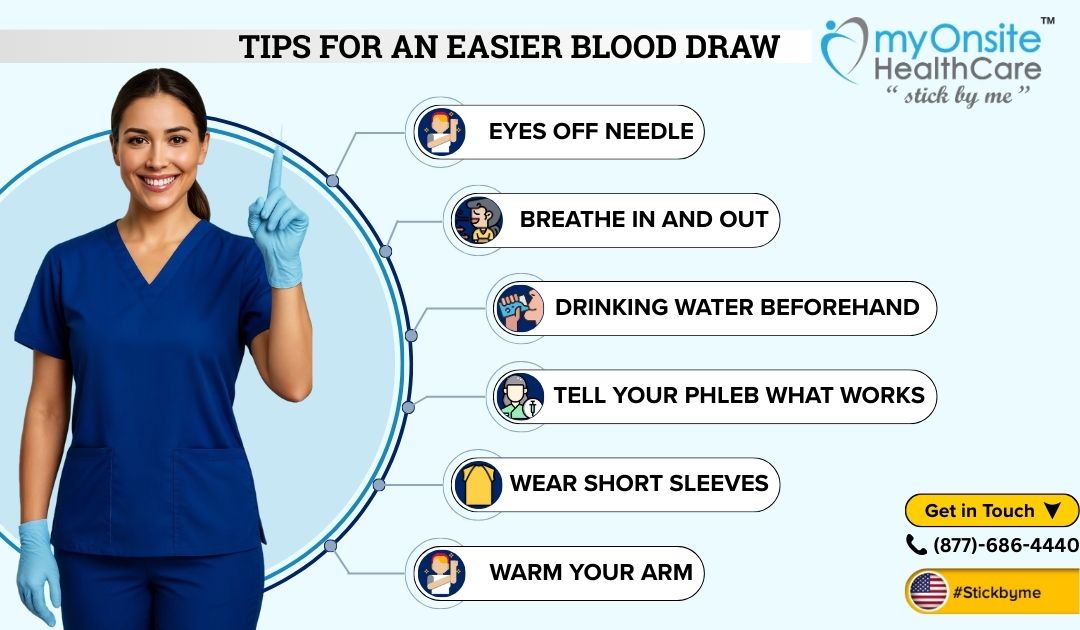
- Sip water ahead of time. Plain water the day before and morning helps veins show. If you’re fasting, water is usually allowed—follow your specific instructions.(If you’re unsure about timing, here’s a quick guide to how long you should fast before a blood draw.)
- Add warmth. Warm shower or a brief warm compress on the inside of your elbow (or back of hand if that’s your best spot).
- Dress for easy access. Short sleeves or loose layers keep positioning quick.
- Keep your morning un-rushed. A five-minute buffer beats sprinting into the chair. Prefer the comfort of home? Our home blood draws can make the whole experience calmer.
- Use numbing the right way (if needed). If your clinician says it’s okay, apply topical anesthetic about an hour before and cover it so it actually absorbs; uncover at check-in.
- Share your map. Tell the phlebotomist what’s worked: “left arm above the crease,” “hands are easier,” “veins roll,” or “I’ve fainted before.”
During Blood Draw
- Recline if you’re light-headed. No bravery points for staying upright.
- Look away and distract your brain. Headphones, a short video, or a quick chat help more than you’d think.
- Breathe with a long exhale. Inhale through your nose; slow out-breath as the needle touches skin—turns “sting” into “pinch.”
- Use applied tension if you faint. Gently tighten thighs, glutes, and core ~10 seconds, relax ~20, repeat.
- Stay loose but still. Open hand, relaxed shoulders, minimal movement once the tube is filling. Skip marathon fist-pumping; gentle squeeze only if asked.
- Speak up fast if anything feels sharp/electric/tingly so the angle can be adjusted.
When veins are “hard to find”
Totally common. Warmth and hydration do most of the heavy lifting. Let the arm hang below heart level for a minute to encourage filling. Hands or forearms can be great alternatives depending on your tests and anatomy. These are all standard best practices in phlebotomy outlined by the World Health Organization.
Aftercare that helps prevent bruises
Hold firm pressure for a few minutes—really press—then keep the bandage on for 30–60 minutes. Hydrate, have a light snack if you fasted, and take it easy on that arm for the rest of the day. If you bruise anyway, try a cool compress for ten minutes at a time. Want more detail? See our patient guide on blood draw bruising. Call your clinician if you notice spreading redness, persistent swelling, numbness/tingling, or bleeding that doesn’t stop with steady pressure.
Older adults and anxious brains
- Fragile skin: Ask for gentle tape and plan a little longer pressure time. If you take blood thinners, mention it so the team can hold pressure longer and choose a softer dressing.
- Anxiety plan: Build a simple ritual you repeat every time—water + warmth, headphones, eyes away, long exhale. Bodies learn routines; it gets easier.
If you’re taking part in research, protocols may adjust prep or positioning—here’s NIH’s primer on finding a clinical trial.
Quick cheat sheet (save this)
Before: water, warmth, easy sleeves, calm start.
During: recline if needed, look away, long exhale, applied tension for fainters, be still.
After: firm pressure, bandage 30–60 minutes, hydrate, easy on that arm.
Frequently Asked Questions
Does getting blood drawn hurt?+
Can I drink water before a fasting blood test?+
Is a butterfly needle less painful?+
Why do I bruise sometimes?+
What if I’ve fainted before?+
Hand vs. arm—does it matter?+
Do numbing creams remove all pain?+
Should I avoid coffee?+
Can I work out after?+
What should I tell the phlebotomist?+