
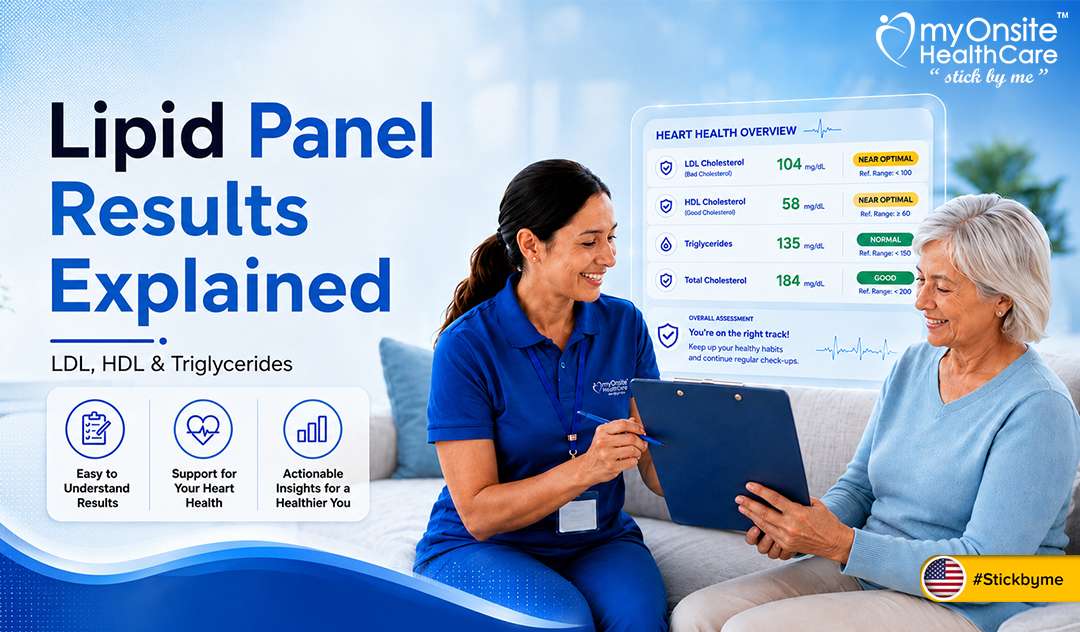
You get your cholesterol results back, and there they are — LDL, HDL, triglycerides, total cholesterol — all sitting in neat little rows like they’re supposed to make immediate sense. But for most people, they don’t. You might see one number flagged as “high,” another that looks fine, and still not know whether you should be worried, relieved, or calling your doctor right away.
That’s pretty normal.
A lipid panel is one of those routine blood tests that gets ordered all the time, but the report can feel a little cold if nobody walks you through it. The numbers matter, of course. But they make a lot more sense when you understand what each one is actually telling you about your heart health.
So, let’s break it down in plain English.
First, What Is a Lipid Panel?
A lipid panel is a blood test that looks at fats in your bloodstream. Most commonly, it measures:
- LDL cholesterol
- HDL cholesterol
- Triglycerides
- Total cholesterol
Your healthcare provider may order it during a yearly checkup, or more often if you have risk factors like high blood pressure, diabetes, obesity, smoking history, or a family history of heart disease.
Think of it less like a “pass or fail” test and more like a snapshot. It gives your provider a better idea of how your body is handling cholesterol and whether your heart and blood vessels may need closer attention.
That’s also why keeping up with routine blood tests and health checkups can be so helpful. A lipid panel may catch patterns long before you feel anything unusual.
LDL Cholesterol: The One People Usually Worry About
LDL stands for low-density lipoprotein.
You’ve probably heard it called “bad cholesterol.” That nickname is a little dramatic, but it exists for a reason. When LDL levels are too high, cholesterol can build up along the walls of your arteries. Over time, that buildup can turn into plaque, which may narrow blood vessels and raise the risk of heart disease or stroke.
| LDL Level | What It Usually Means |
|---|---|
| Below 100 mg/dL | Optimal for many adults |
| 100–129 mg/dL | Near optimal |
| 130–159 mg/dL | Borderline high |
| 160–189 mg/dL | High |
| 190 mg/dL or higher | Very high |
Here’s the part that catches people off guard: you can feel completely fine and still have high LDL.
No chest pain. No obvious symptoms. No big warning sign.
That’s why routine blood work matters. Elevated cholesterol often does its thing quietly in the background.
A few things that can push LDL higher include:
- Eating a lot of saturated or trans fats
- Smoking
- Not moving much during the week
- Genetics
- Certain medical conditions
- Some medications
And yes, some people do “everything right” and still struggle with cholesterol because family history plays a big role.
For anyone thinking more broadly about prevention, this guide on ways to reduce your heart disease risk is a good next read.
HDL Cholesterol: The One You Usually Want Higher
HDL stands for high-density lipoprotein.
This is the one often called “good cholesterol.” HDL helps carry cholesterol away from the arteries and back to the liver, where the body can process it, which is why it’s often called “good” cholesterol.
Typical HDL numbers look something like this:
| HDL Level | What It Usually Means |
|---|---|
| Below 40 mg/dL in men | Low |
| Below 50 mg/dL in women | Low |
| 60 mg/dL or higher | Often considered protective |
Most folks focus so much on lowering LDL that they forget HDL is part of the story too.
Things that may support healthier HDL levels:
- Regular walking, biking, swimming, or other movement
- Not smoking
- Maintaining a healthy weight
- Choosing healthier fats, like olive oil, nuts, seeds, and avocado
- Managing blood sugar if diabetes or insulin resistance is involved
Nothing here has to be extreme. Sometimes the boring stuff — walking more, eating more fiber, cutting back on fried foods — really does help over time.
Triglycerides: The Number People Skip Over
Triglycerides don’t get as much attention as cholesterol, but they matter.
They’re another type of fat in your blood. When you eat, your body converts extra calories it doesn’t need right away into triglycerides. Those triglycerides are stored and used later for energy.
That’s normal.
The issue is when triglycerides stay high.
| Triglyceride Level | What It Usually Means |
|---|---|
| Below 150 mg/dL | Normal |
| 150–199 mg/dL | Borderline high |
| 200–499 mg/dL | High |
| 500 mg/dL or higher | Very high |
High triglycerides can be connected to diabetes, excess alcohol use, obesity, certain medications, and diets high in sugar or refined carbohydrates.
That last one surprises a lot of people.
Someone may cut back on greasy foods but still drink soda, sweet tea, or eat a lot of white bread, pastries, or late-night snacks. Those habits can show up in triglyceride numbers.
If blood sugar is part of the picture for you, it may also be worth reading about healthy eating tips for diabetes control, since diabetes and triglycerides often show up in the same conversation.
And What About Total Cholesterol?
Total cholesterol is exactly what it sounds like — a combined number that includes different cholesterol measurements.
In general:
- Under 200 mg/dL is usually considered desirable
- 200–239 mg/dL is borderline high
- 240 mg/dL or higher is high
But total cholesterol alone doesn’t tell the whole story.
Two people could have the same total cholesterol number and very different risk levels. One person may have strong HDL and decent triglycerides. Another may have high LDL and high triglycerides.
Same total number. Different picture.
That’s why providers look at the full lipid panel, not just one line on the report.
Your Results Need Context
This is where it gets a little more personal.
Your cholesterol numbers matter, but they’re not judged in a vacuum. Your provider may also think about:
- Your age
- Blood pressure
- Family history
- Smoking history
- Diabetes or prediabetes
- Weight
- Past heart problems
- Medications
- Overall lifestyle
So if your LDL is slightly high, that doesn’t automatically mean panic. And if your numbers look “mostly okay,” that doesn’t always mean you can ignore everything else.
It’s a pattern. A conversation. A risk picture.
That’s why it’s worth asking your provider, “What do these numbers mean for me?”
Getting a Lipid Panel Shouldn’t Be the Hard Part
For some people, getting lab work is simple. They drive to the lab, check in, get the blood drawn, and go home.
But that’s not everyone’s reality.
For older adults, people with chronic conditions, patients with limited mobility, busy caregivers, or anyone recovering at home, even a basic blood test can become a whole production.
That’s where home blood draw services can make a real difference.
At myOnsite Healthcare, patients can complete routine blood work, including lipid panel testing, from home when ordered by their provider. The mobile team sees this every day — people who want to stay on top of their health but don’t always have an easy way to get to a lab.
And honestly, that consistency matters. When lab testing at home is easier to schedule and less stressful, people are more likely to keep up with monitoring instead of putting it off.
So, What’s the Bottom Line?
A lipid panel is more than just a cholesterol test.
It helps show how your body is handling fats in the blood and gives your healthcare provider useful clues about heart and blood vessel health.
A simple way to remember it:
- LDL: usually better when lower
- HDL: usually better when higher
- Triglycerides: important, and often affected by sugar, alcohol, weight, and metabolism
- Total cholesterol: helpful, but not the whole story
And one more thing — don’t try to diagnose yourself from a single lab report. Use your results as a starting point for a real conversation with your provider.
If getting to a lab has been a hassle, lab testing at home may make routine monitoring easier to keep up with.
Want to get your cholesterol checked without the hassle?
Our mobile phlebotomists come to your home to collect blood samples for lipid panels and other routine lab work — no waiting rooms, no travel stress. Your provider orders the test, and we handle the rest.
Frequently Asked Questions
Need help with blood work or specimen collection?
Whether you have difficult veins, need routine lab work, or want the convenience of home blood draws, myOnsite Healthcare brings professional mobile phlebotomy to your door.