
Keeping up with regular lab work sounds easy—until you’re actually the one doing it. Between busy schedules, not feeling your best, and the hassle of getting to a lab, those “routine” tests can start slipping through the cracks.
That’s where at-home lab testing starts to change things. Instead of planning your day around an appointment, the appointment comes to you. If you’re curious how this works in real life, here’s a simple guide on how to schedule a home blood draw.
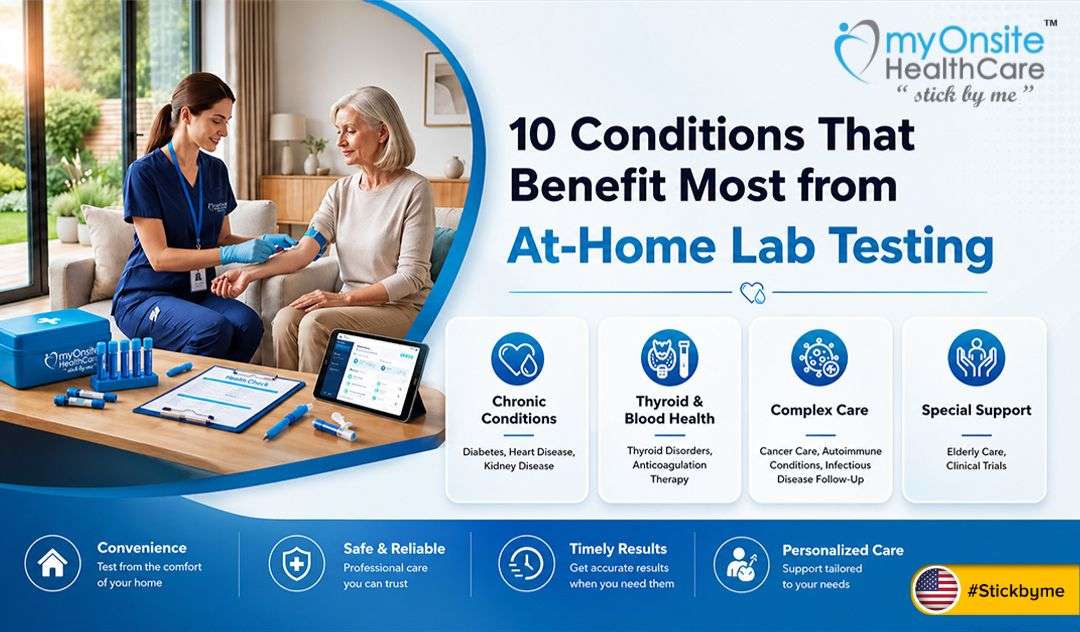
Here are 10 conditions where lab testing at home can be especially helpful.
1. Diabetes
Diabetes management depends on consistency. Blood glucose, A1C, kidney markers, and cholesterol may all need regular monitoring. In fact, the CDC reports that maintaining A1C below 7% significantly reduces diabetes complications.
For many patients, getting to a lab every time is a hassle. A home blood draw makes it easier to stay on schedule without interrupting the whole day. If you’re also working on lifestyle changes, this guide on healthy eating tips for diabetes control can help support your routine.
2. Heart Disease
People with heart conditions often need lipid panels, medication monitoring, and other routine blood tests.
When fatigue, shortness of breath, or mobility issues are part of daily life, skipping the extra trip matters. At-home testing helps patients keep up with care without adding more strain.
3. Kidney Disease
Kidney health can change quietly, which is why regular lab work is so important.
Creatinine, electrolytes, and other markers help doctors catch changes early. Having labs collected at home can help patients avoid missed or delayed testing. You can also explore these kidney health management tips for day-to-day support.
4. Thyroid Disorders
Thyroid medication often needs adjusting based on lab results.
That means testing may happen more often than people expect, especially early on. At-home lab testing makes those repeat checks much easier to manage.
5. Cancer Care and Oncology Monitoring
Cancer treatment can already take a lot out of a person.
Repeated blood tests may be needed to check counts, organ function, side effects, or treatment response. Being able to complete some testing from home gives patients a little more comfort and privacy during a difficult time. There’s a deeper look at this here: mobile phlebotomy for oncology patients.
6. Elderly Patients with Multiple Conditions
Older adults often need labs for several things at once — heart health, diabetes, medications, kidney function, and more.
For someone using a walker, wheelchair, or relying on family for rides, a lab visit can become a major event. Home collection keeps care moving while reducing stress.
7. Autoimmune Conditions
Lupus, rheumatoid arthritis, and other autoimmune diseases often require ongoing monitoring.
The tricky part? Flare-ups can make leaving home harder right when testing matters most. Mobile lab services help close that gap.
8. Infectious Disease Follow-Up
Some patients need repeat testing after infections or while managing chronic infectious conditions.
At-home testing can reduce unnecessary exposure to crowded waiting rooms while still helping doctors track progress.
9. Anticoagulation Therapy
Patients taking blood thinners may need regular monitoring to make sure medication levels stay safe.
When testing is frequent, even small inconveniences add up. A scheduled home blood draw can make the routine feel much less disruptive. You can learn more about anticoagulation testing at home here.
10. Clinical Trial Participation
Clinical trial participants often need labs collected on a strict schedule.
Travel can be one of the reasons people drop out or miss visits. Research shows that up to 30% of clinical trial participants drop out before completion due to logistical burden. At-home specimen collection helps improve consistency while making participation easier for patients.
Why This Matters
The common thread here is simple: regular testing only works when people can actually complete it.
Studies show that better adherence to chronic disease monitoring is directly linked to improved health outcomes and reduced hospitalizations.
At-home lab testing helps remove barriers like:
- Travel time
- Mobility challenges
- Long waits
- Scheduling conflicts
- Exposure to crowded spaces
- Caregiver coordination
At myOnsite Healthcare, this is something the mobile team sees every day. When lab work becomes easier, patients are more likely to follow through — and that can make care feel a lot less overwhelming.