
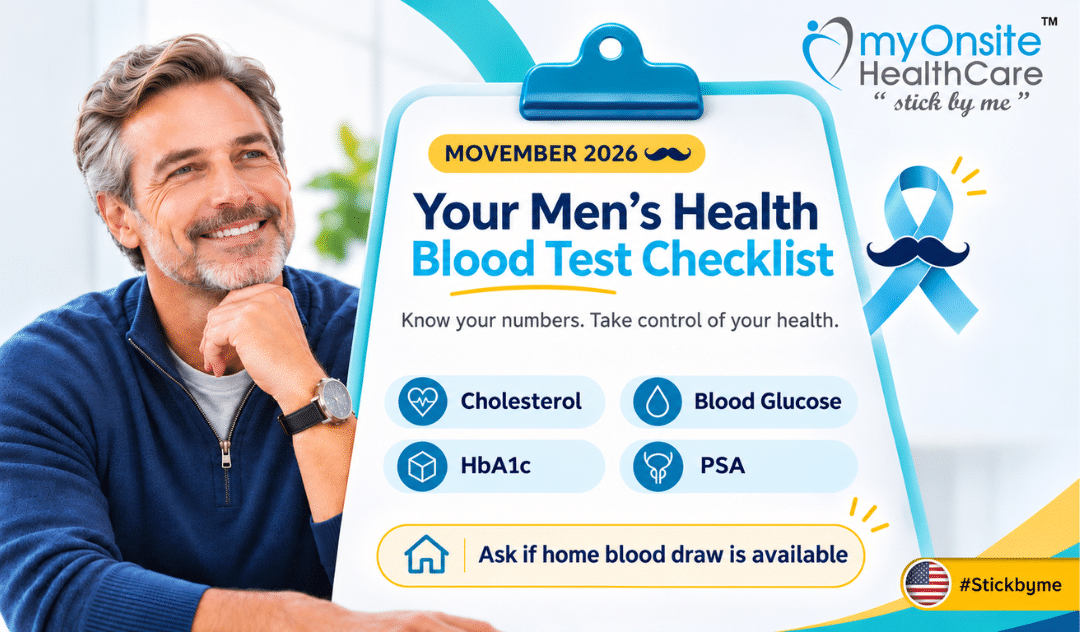
This Movember, make men’s health a priority. Discover which blood tests to discuss with your doctor, how to prepare for prescribed testing, and whether you can complete your blood draw at home.
When was the last time you completed all the health tests your doctor recommended?
For many men, scheduling a healthcare appointment is only the beginning. Finding time for laboratory testing, understanding preparation instructions, and following up on results can be equally challenging.
Movember 2026 is an opportunity to turn men’s health awareness into meaningful action.
Instead of focusing only on general wellness advice, this men’s health blood tests checklist helps you understand which tests may be relevant, what to ask your healthcare provider, and how to complete prescribed blood work.
Whether you’re planning a preventive checkup or already have a lab order, knowing your next steps can make managing your health easier.
Quick Answer: Which Blood Tests Should Men Consider?
Men may be advised to have cholesterol, blood glucose, HbA1c, PSA, or other blood tests depending on their age, symptoms, family history, and individual health risks.
Not every man needs every blood test. Your healthcare provider should recommend testing based on your medical needs rather than a standard checklist.
If your doctor has already ordered blood work, many eligible samples can be collected at home through mobile phlebotomy, depending on the test requirements and service availability.
4 Blood Tests Men May Discuss With Their Doctor
Preventive healthcare is about identifying meaningful health risks and making informed decisions - not requesting unnecessary laboratory tests.
Here are four categories of blood tests that may come up during a men’s health checkup.
1. Cholesterol Testing (Lipid Panel)
A lipid panel measures cholesterol and triglyceride levels in your blood.
It commonly includes LDL cholesterol, HDL cholesterol, and triglycerides. These measurements help healthcare providers evaluate cardiovascular risk alongside factors such as blood pressure, smoking history, age, and existing medical conditions.
High cholesterol may not cause noticeable symptoms, making appropriate screening an important part of cardiovascular risk assessment.
Ask your doctor: “Based on my health history, should I have my cholesterol checked?”
2. Blood Glucose and HbA1c Testing
Blood glucose and HbA1c tests help healthcare providers screen for or monitor blood sugar-related conditions.
A blood glucose test measures blood sugar at a particular time, while an HbA1c test reflects average blood glucose levels over approximately the previous two to three months.
The U.S. Preventive Services Task Force (USPSTF) recommends screening adults ages 35-70 who have overweight or obesity for prediabetes and type 2 diabetes.
Other health factors may also influence when screening is appropriate.
Ask your doctor: “Should I be screened for diabetes or prediabetes based on my personal risk factors?”
3. Prostate-Specific Antigen (PSA) Testing
A PSA blood test measures prostate-specific antigen, a substance produced by the prostate.
PSA testing may be considered during a discussion about prostate cancer screening. However, an elevated PSA result does not automatically mean prostate cancer is present.
The American Cancer Society recommends informed discussions about screening, including its potential benefits, limitations, and risks.
For average-risk men expected to live at least another 10 years, the organization recommends beginning this discussion at age 50, with earlier conversations for certain higher-risk groups.
Ask your doctor: “Should I consider PSA screening based on my age, family history, and individual risk?”
4. Other Blood Tests Based on Your Health Needs
Depending on your medical history, symptoms, medications, and existing conditions, your healthcare provider may recommend additional laboratory tests.
Examples include:
- Complete blood count (CBC): Evaluates blood cells and can help investigate conditions such as anemia.
- Comprehensive metabolic panel (CMP): Provides information about several aspects of metabolism, including kidney and liver-related measurements.
- Condition-specific tests: May be ordered to investigate symptoms or monitor diagnosed medical conditions.
These tests are not automatically necessary for every healthy adult.
For additional information, explore our guide to blood tests that can improve your long-term health.
Men’s Health Screening Goes Beyond Blood Tests
Blood testing is just one part of preventive healthcare.
Depending on your age and individual risks, your healthcare provider may also recommend:
- Blood pressure screening: To identify high blood pressure.
- Colorectal cancer screening: Using an appropriate screening method based on your risk.
- Mental health assessment: To discuss concerns involving stress, depression, sleep, or emotional well-being.
- Lifestyle assessment: To review physical activity, nutrition, tobacco use, and other health-related factors.
Not every screening involves collecting blood.
The goal is to create a personalized preventive care plan that addresses your health needs.
Your Movember Men’s Health Checklist
A productive healthcare appointment should leave you with a clear understanding of what to do next.
Before Your Checkup
Prepare by reviewing the following information:
- Your personal and family medical history
- Any new symptoms or ongoing health concerns
- Current medications and supplements
- Previous screening and laboratory test results
- Questions about recommended preventive care
Before Leaving Your Appointment
Ask your healthcare provider these four questions:
- Which blood tests do I need, and what will the results help us understand?
- Do I need to fast or follow special preparation instructions?
- Can my ordered blood samples be collected at home?
- Who will review my results, and when should I follow up?
These questions help you move from receiving a laboratory order to completing the necessary testing and understanding the results.
Can Men’s Health Blood Tests Be Collected at Home?
Yes. Many prescribed blood samples can be collected at home through mobile phlebotomy, provided the laboratory order, specimen requirements, and service availability permit it.
Mobile phlebotomy involves a trained professional visiting an approved location to collect ordered blood samples and coordinate their transport to the designated laboratory.
The laboratory performs the testing, while your healthcare provider interprets the findings and recommends any necessary follow-up.
An at-home blood draw may be particularly convenient for:
- Busy professionals managing demanding work schedules
- Older adults who prefer home-based specimen collection
- People with mobility or transportation challenges
- Patients who require ongoing laboratory monitoring
For eligible patients, home collection may eliminate the need to travel to a traditional blood collection facility.
Already have a doctor’s order for blood work?
Explore whether professional at-home specimen collection is available for your testing needs.
Check Home Blood Draw Availability →
Service depends on your location, laboratory requirements, and appointment availability.
How to Prepare for Your At-Home Blood Draw
Proper preparation can help ensure that your collection follows the laboratory’s requirements.
Confirm Your Laboratory Order
Check which tests have been ordered and where the specimens need to be processed.
Some tests may require specific collection methods, handling procedures, or laboratory arrangements.
Follow Fasting and Medication Instructions
Certain blood tests require fasting, while others do not.
Always follow the instructions provided by your healthcare provider or laboratory. Do not stop prescribed medications or begin fasting unless you have been instructed to do so.
Confirm Any Special Collection Requirements
Some tests require collection at a particular time or involve additional specimen-handling requirements.
Clarify these details before your appointment.
Plan Your Follow-Up
Know how your healthcare provider will receive the results and when they expect to review them with you.
Completing the blood draw is an important step, but understanding the results is equally important.
How to Request a Home Blood Draw With myOnsite Healthcare
myOnsite Healthcare provides professional mobile phlebotomy services to help patients arrange eligible specimen collections outside traditional laboratory facilities.
Here is how to get started.
Step 1: Have Your Test Information Available
Confirm which blood tests your healthcare provider has ordered and whether there are any special collection instructions.
Step 2: Submit Your Service Inquiry
Provide the requested contact and location information through the myOnsite Healthcare home blood draw inquiry form.
Step 3: Confirm Availability
The myOnsite team can review your request, determine whether mobile collection is suitable for the tests ordered, and explain available scheduling options.
Step 4: Complete Your Collection
Once an appointment is confirmed, follow the preparation instructions and complete the specimen collection at the approved location.
The designated laboratory processes the specimens, and your healthcare provider remains responsible for interpreting the results.
For additional guidance, read How to Schedule a Home Blood Draw: What Patients Should Know.
This Movember, Turn Health Awareness Into Action
Movember is an important reminder that men’s health deserves attention throughout the year.
Start with an informed conversation with your healthcare provider. Understand which preventive screenings are appropriate, ask about any necessary laboratory tests, and create a practical plan to complete them.
If you already have an order for blood work, an at-home blood draw may offer a more convenient way to complete the collection.
Ready to complete your prescribed blood work?
myOnsite Healthcare helps eligible patients access professional mobile specimen collection in supported U.S. locations.
Prefer to speak with our team? Call myOnsite Healthcare at (941) 271-0701 to discuss collection requirements and service availability.
Request Your Home Blood Draw →
Submitting an inquiry does not automatically confirm an appointment.
Medical disclaimer: This article is provided for general educational purposes only and does not replace professional medical advice, diagnosis, or treatment. Consult a qualified healthcare professional regarding appropriate screenings, laboratory testing, preparation, and interpretation of results.
Frequently Asked Questions
What blood tests should men consider during a routine health checkup?
Depending on individual health needs, a healthcare provider may recommend cholesterol, blood glucose, HbA1c, PSA, or other blood tests. The appropriate tests depend on age, symptoms, family history, existing medical conditions, and personal risk factors.
Do men need blood tests every year?
Not necessarily. Healthy adults do not automatically need the same laboratory tests every year. Testing frequency depends on health history, previous results, risk factors, and clinical recommendations. Some conditions require more frequent monitoring.
At what age should men discuss prostate cancer screening?
The American Cancer Society recommends discussing screening at age 50 for average-risk men expected to live at least 10 more years. Higher-risk men may need earlier discussions, including at ages 45 or 40 depending on their risk factors. PSA testing should involve shared decision-making with a healthcare provider.
What is the difference between blood glucose and HbA1c testing?
A blood glucose test measures blood sugar at a specific point in time. An HbA1c test reflects average blood glucose levels over approximately two to three months. Both may help with diabetes screening, diagnosis, or monitoring, depending on clinical circumstances.
Do I need to fast before men’s health blood tests?
Not all blood tests require fasting. Requirements depend on the tests ordered and the laboratory’s instructions. Ask your healthcare provider whether fasting or any other preparation is necessary before your appointment.
Can cholesterol, HbA1c, and PSA blood samples be collected at home?
Many such samples can be collected through mobile phlebotomy when appropriately ordered and when the laboratory’s specimen collection, handling, and transport requirements can be met. Confirm eligibility and availability before arranging an appointment.
Do I need a doctor’s order for an at-home blood draw?
Many diagnostic blood tests require an authorized healthcare provider’s order. The requirements can vary by test and laboratory arrangement. Contact the collection service to confirm what documentation is needed.
Does myOnsite Healthcare perform the laboratory testing?
myOnsite Healthcare provides mobile specimen collection services. The designated laboratory performs the testing, while the ordering healthcare provider interprets the results and recommends any necessary medical follow-up.
Is myOnsite Healthcare available for home blood draws near me?
myOnsite Healthcare provides mobile specimen collection in supported U.S. locations. Availability depends on your ZIP code, the tests ordered, and appointment and specimen requirements. The myOnsite team can review your location and service needs when you submit an inquiry.
How do I request an at-home blood draw with myOnsite Healthcare?
You can submit an inquiry through the myOnsite Healthcare home blood draw service page. Provide the requested contact and location information and follow the instructions for describing your needs. The team can review the request and explain available collection and scheduling options. An inquiry does not automatically confirm an appointment.