
Preparing for chemotherapy often means managing treatment appointments, transportation, medications, and more medical information than anyone wants to process at once.
Then your oncology team tells you that you need another blood test before treatment.
Although it may feel like one more appointment, blood work before chemotherapy has an important purpose. It helps your oncology team determine whether your body is ready for the next treatment cycle.
Sometimes the results confirm that chemotherapy can continue as scheduled. Other times, they show that your body needs additional time to recover or that your treatment plan may need to be adjusted.
The Simple Answer
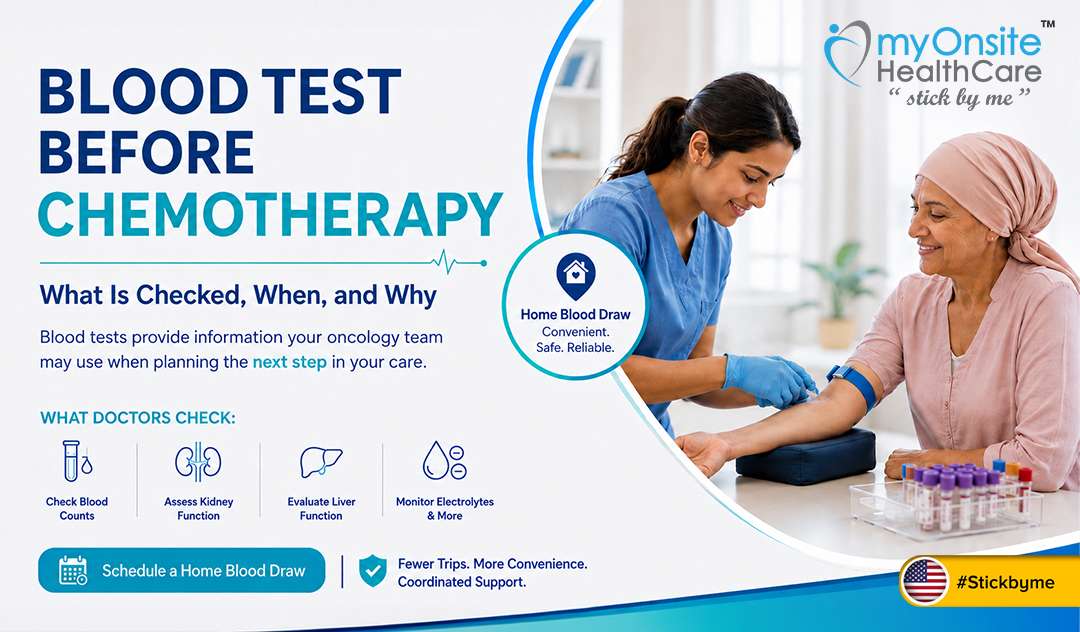
A blood test before chemotherapy helps your oncology team evaluate whether your blood cells, kidneys, liver, and other important body functions are healthy enough for treatment.
Doctors commonly review:
- White blood cells and neutrophils
- Red blood cells and hemoglobin
- Platelets
- Kidney function
- Liver function
- Electrolytes
- Certain tumor markers, when appropriate
The blood draw may be completed on the day of chemotherapy or within a few days before treatment, depending on the cancer center, treatment protocol, and laboratory requirements.
For patients experiencing fatigue, reduced immunity, transportation difficulties, or limited mobility, an eligible home blood draw may remove an additional trip to the laboratory.
Need Pre-Chemotherapy Blood Work Completed at Home?
myOnsite Healthcare coordinates ordered specimen collection at home, subject to laboratory requirements, appointment timing, patient location, and service availability.
Have your ZIP code, laboratory order, designated laboratory, and treatment date available when contacting the scheduling team.
Why Is Blood Work Needed Before Chemotherapy?
Chemotherapy targets rapidly growing cancer cells. However, treatment can also affect healthy cells that divide quickly, including cells produced in the bone marrow.
As a result, chemotherapy may temporarily reduce the blood cells your body needs to:
- Fight infections
- Carry oxygen
- Control bleeding
- Recover between treatment cycles
Blood work helps your oncology team answer an important question:
Is it appropriate and safe to give chemotherapy today?
The answer depends on your diagnosis, treatment plan, symptoms, previous test results, medications, and overall health.
A patient may feel relatively normal while still having a low neutrophil or platelet count. Another patient may feel exhausted while their laboratory results remain within the range expected by their oncology team.
That is why symptoms and laboratory results are both important.
According to Cancer Research UK, blood tests before and during chemotherapy help doctors check blood-cell levels and evaluate kidney and liver function before treatment.
What Blood Tests Are Done Before Chemotherapy?
Most patients have a complete blood count, commonly called a CBC. A CBC measures several important components of the blood, including:
- White blood cells
- Red blood cells
- Hemoglobin
- Hematocrit
- Platelets
A CBC with a differential may also measure different types of white blood cells, including neutrophils.
A complete blood count, or CBC can help the care team monitor changes in blood-cell counts during treatment.
Your oncology team may also order a comprehensive metabolic panel or another chemistry panel to review kidney function, liver function, electrolytes, and other measurements.
Common Tests Before Chemotherapy
| Test | What It Checks | Why It May Matter Before Chemotherapy |
|---|---|---|
| White blood cell count | Infection-fighting cells | Low levels may increase infection risk |
| Absolute neutrophil count | An important type of white blood cell | Helps the team evaluate infection risk |
| Hemoglobin | The blood’s oxygen-carrying capacity | Low levels may contribute to fatigue or shortness of breath |
| Platelet count | The blood’s ability to clot | Low levels may increase bruising or bleeding |
| Creatinine and eGFR | Kidney function | Some medicines are processed or removed through the kidneys |
| AST, ALT, and bilirubin | Liver function | The liver helps process many medications |
| Sodium, potassium, calcium, and magnesium | Fluid and mineral balance | Significant changes may require attention before treatment |
Not every patient receives every test. Your oncologist chooses the required blood work based on your:
- Cancer type
- Chemotherapy medications
- Treatment cycle
- Previous test results
- Symptoms
- Medical history
- General health
White Blood Cells, Neutrophils, and ANC
White blood cells help protect the body from infection.
Neutrophils are an important type of white blood cell. The number of neutrophils in the blood is often reported as the absolute neutrophil count, or ANC.
Chemotherapy may lower white blood cell and neutrophil levels. This condition is known as neutropenia, and it may increase the risk of infection.
The National Cancer Institute provides additional guidance about infection and neutropenia during cancer treatment.
You might hear your oncology team say:
- “Your counts are low.”
- “Your neutrophils need more time to recover.”
- “We need to repeat your CBC.”
- “Treatment will be delayed this week.”
A delay can be frustrating, especially after you have arranged transportation, taken time away from work, or asked a caregiver to accompany you.
However, a treatment delay is often a safety decision—not proof that chemotherapy has stopped working.
Your doctor may:
- Repeat the blood test
- Delay the next treatment
- Adjust the chemotherapy dose
- Change the treatment schedule
- Discuss medication that supports white blood cell production
There is no single ANC or white blood cell cutoff that applies to every patient. The acceptable level depends on the chemotherapy protocol, diagnosis, treatment goals, laboratory reference ranges, and individual circumstances.
Red Blood Cells and Hemoglobin
Red blood cells transport oxygen throughout the body. Hemoglobin is the protein inside red blood cells that carries oxygen.
When red blood cells or hemoglobin decrease, patients may experience:
- Unusual tiredness
- Weakness
- Dizziness
- A rapid heartbeat
- Shortness of breath
- Difficulty completing normal activities
Fatigue is common during cancer treatment, but you should still tell your oncology team if it becomes more severe, changes suddenly, or interferes with daily activities.
Depending on your symptoms and test results, your doctor may:
- Continue treatment
- Order additional testing
- Adjust your treatment plan
- Recommend supportive care
- Discuss a transfusion when medically appropriate
Platelets
Platelets help the blood clot after an injury. A low platelet count is known as thrombocytopenia. Chemotherapy and some other cancer treatments may lower platelet levels.
Possible signs of low platelets include:
- Easy bruising
- Nosebleeds
- Bleeding gums
- Small red or purple spots on the skin
- Bleeding that takes longer than usual to stop
Patients sometimes assume that mild bruising is not important enough to mention. During chemotherapy, you should still tell your care team about new or unusual bleeding or bruising.
The National Cancer Institute provides guidance about bleeding and bruising during cancer treatment.
If your platelet count falls below the range considered appropriate for your treatment, chemotherapy may be delayed, adjusted, or reassessed.
Why Is Kidney Function Checked?
Some chemotherapy medications are processed or removed from the body through the kidneys.
If kidney function changes, a medicine may remain in the body longer than expected or increase the likelihood of side effects.
Common kidney-related measurements include:
- Creatinine
- Blood urea nitrogen, or BUN
- Estimated glomerular filtration rate, or eGFR
The eGFR estimates how effectively the kidneys are filtering the blood. Your oncology team may compare your current result with previous measurements rather than evaluating one result by itself.
Your doctor may also ask about:
- Hydration
- Vomiting or diarrhea
- Changes in urination
- Other medications
- Existing kidney conditions
An abnormal kidney result does not automatically mean that chemotherapy will stop. It means the oncology team may need to review the situation before deciding what happens next.
Why Is Liver Function Checked?
The liver helps process many medicines, including certain chemotherapy drugs.
A liver panel may include:
- AST
- ALT
- Bilirubin
- Alkaline phosphatase
- Albumin
Results can change for several reasons, including:
- Medication effects
- Infection
- Dehydration
- An existing liver condition
- The cancer itself
Your oncologist will usually evaluate the overall pattern of results, your symptoms, and changes over time rather than relying on one number.
An abnormal result does not always mean that treatment must stop. Your oncology team may repeat the test, change the dose, review other medications, or investigate the cause.
Are Electrolytes Checked Before Chemotherapy?
Often, yes. Electrolytes help support hydration, muscle function, nerve activity, and heart rhythm.
Your oncology team may check:
- Sodium
- Potassium
- Calcium
- Magnesium
Chemotherapy, vomiting, diarrhea, reduced appetite, dehydration, and other medications may affect electrolyte levels.
A small change may require only monitoring. A more significant change may lead to:
- Fluids
- Supplements
- Medication
- Additional testing
- A temporary treatment adjustment
Are Tumor Markers Checked Before Chemotherapy?
Certain tumor markers may be measured during cancer care, but they are not required before every chemotherapy treatment.
Tumor-marker testing may sometimes help your doctor:
- Monitor the cancer
- Evaluate response to treatment
- Track changes over time
- Plan additional testing
Tumor markers should not be confused with routine blood counts and organ-function tests used to evaluate whether the body is ready for another treatment cycle.
The tests ordered will depend on your cancer type, treatment plan, and individual medical needs.
When Should Blood Work Be Done Before Chemotherapy?
Blood work may be completed on the same day as chemotherapy or within a few days before treatment.
The exact timing depends on:
- The cancer center
- The chemotherapy protocol
- The designated laboratory
- How quickly results are available
- Whether specialized testing is required
- Your oncology team’s instructions
Same-day testing is common because it gives the oncology team a current view of your blood counts and organ function.
However, traveling to a laboratory and then attending chemotherapy may be physically demanding, particularly for patients experiencing:
- Fatigue
- Nausea
- Neuropathy
- Reduced immunity
- Mobility limitations
- Transportation difficulties
When permitted by the oncology team and laboratory, mobile phlebotomy may allow the collection to be completed at home before the treatment visit.
The specimen must still be collected, labeled, handled, transported, and processed according to the laboratory order and care plan.
How Long Do Blood Test Results Take?
Routine CBC and chemistry results may be processed relatively quickly, but the exact turnaround time depends on the laboratory and tests ordered.
Some results may be available within hours. Specialized testing may take longer.
Before arranging a home collection, confirm:
- Which laboratory must process the specimen
- When your oncologist needs the results
- Whether the laboratory order is complete
- Whether a special collection kit is required
- Where the results must be sent
- Whether the laboratory accepts specimens collected by a mobile provider
Planning these details before the collection can help reduce last-minute problems on treatment day.
Before arranging the collection, review how to schedule a home blood draw and confirm the laboratory, order, timing, and specimen requirements.
What Happens If My Blood Counts Are Too Low?
If your blood counts or other test results are outside the range expected for treatment, your oncologist may:
- Delay chemotherapy
- Repeat the blood test
- Reduce the chemotherapy dose
- Adjust the schedule
- Prescribe growth-factor support
- Provide fluids or electrolyte replacement
- Discuss a blood or platelet transfusion
- Evaluate you for an infection or another medical issue
Many patients hear “treatment delay” and immediately worry that the cancer is getting worse.
However, a short delay does not automatically mean that treatment is failing. It may mean your body needs additional time to recover.
Your oncologist considers your:
- Diagnosis
- Treatment goals
- Previous side effects
- Blood-count trends
- Symptoms
- Overall health
- Risks of continuing treatment that day
Never use another patient’s laboratory values to decide whether your own results are safe.
Can I Do Anything to Improve My Blood Counts?
There is no single food, drink, vitamin, or supplement that can reliably increase chemotherapy-related blood counts overnight.
Adequate nutrition, hydration, rest, and following your oncology team’s instructions may support recovery, but they do not replace medical care.
Do not begin taking:
- Iron supplements
- Vitamins
- Herbal products
- Protein supplements
- Over-the-counter remedies
without first speaking with your oncology team.
Some products may interact with treatment. Others may not address the actual reason your blood count is low.
Do I Need to Fast Before Chemotherapy Blood Work?
A CBC usually does not require fasting.
However, you may need to fast if other blood tests are ordered at the same time.
MedlinePlus recommends following your healthcare provider’s instructions about fasting for a blood test because preparation requirements depend on the tests ordered.
Always follow the instructions provided by your:
- Oncology team
- Laboratory
- Treatment center
If the directions are unclear, call before skipping food, fluids, or medication.
Patients receiving cancer treatment should not fast unless their healthcare team tells them to do so.
For more preparation guidance, read Fasting vs. Non-Fasting Blood Tests: What You Need to Know.
Can I Drink Water Before the Blood Draw?
In many cases, yes. Being adequately hydrated may make veins easier to access and may make the collection more comfortable.
Drink water gradually rather than consuming a large amount immediately before the appointment.
Follow different instructions if your medical team has advised you to restrict fluids because of:
- Kidney disease
- Heart disease
- Fluid retention
- Another medical condition
Learn how much water to drink before a blood draw and when to begin hydrating before your appointment.
Can Pre-Chemotherapy Blood Work Be Done at Home?
For many patients, ordered pre-chemotherapy blood work may be collected at home.
Eligibility depends on:
- The laboratory order
- The required tests
- The designated laboratory
- Specimen-handling requirements
- The required collection time
- The patient’s location
- Appointment availability
- Insurance or payment requirements
A home blood draw may be especially helpful for someone who:
- Has difficulty walking or driving
- Depends on a caregiver for transportation
- Feels weak after recent treatment
- Wants to reduce time in public waiting rooms
- Has a compromised immune system
- Requires recurring blood work
- Lives far from a collection center
- Is receiving virtual or home-based care
During an eligible home visit, a mobile phlebotomist may:
- Confirm the patient’s identity
- Review the laboratory order
- Collect the ordered specimen
- Label and prepare the specimen
- Follow the designated laboratory transport process
The mobile phlebotomist does not replace the oncologist or laboratory. Mobile phlebotomy makes the specimen-collection step more accessible.
Have a Laboratory Order?
Share your ZIP code, laboratory order, designated laboratory, and required collection date so the myOnsite Healthcare scheduling team can review your request.
How myOnsite Healthcare Supports Home Blood Draws
myOnsite Healthcare provides home blood draw services for patients who need ordered specimen collection outside a traditional laboratory.
According to myOnsite’s service information, its phlebotomists are:
- Employees
- Background checked
- Trained
- Licensed
- Insured
Service availability is confirmed according to the patient’s location, appointment availability, laboratory requirements, and collection details.
For someone balancing chemotherapy, treatment side effects, work, transportation, and family responsibilities, removing one laboratory trip may make treatment week more manageable.
What Should I Have Ready for a Home Blood Draw?
Before the visit, keep the following information available:
- Your laboratory order
- Photo identification
- Insurance information, when required
- A current medication list
- Your oncology office’s contact information
- Any collection kit provided by the doctor or laboratory
- The date and time of your next treatment
- The name of the designated laboratory
Tell the scheduling team before the appointment if you:
- Have a port
- Have had lymph nodes removed
- Have an arm your medical team told you not to use
- Take blood-thinning medication
- Often feel faint during blood draws
- Have difficult veins
- Need to remain seated or reclined
- Require special assistance
These details can help the collection team prepare appropriately.
Not every mobile phlebotomist is trained, authorized, or equipped to access a chemotherapy port. Confirm all port-access requirements with your oncology team and mobile collection provider before scheduling.
When Should I Call My Oncology Team?
Blood tests provide important information, but your symptoms matter too.
Contact your oncology team promptly if you develop:
- Fever
- Chills
- Difficulty breathing
- Uncontrolled bleeding
- New confusion
- Severe weakness
- Persistent vomiting or diarrhea
- Signs of dehydration
- A sudden or concerning change in your condition
Follow the emergency instructions provided by your cancer center. Do not wait for your next scheduled blood test if you feel seriously unwell.
A Quick Word for Caregivers
Caregivers often become the patient’s scheduler, driver, note-taker, medication organizer, and emotional support person.
If you are coordinating blood work for someone receiving chemotherapy, ask the oncology office:
- When must the specimen be collected?
- Which laboratory should receive it?
- When does the doctor need the results?
- Can the collection be completed at home?
- Who should be contacted if the collection is unsuccessful?
- Does the patient need any special preparation?
- Are special tubes, kits, or handling instructions required?
Getting these answers early can prevent a rushed or confusing morning before treatment.
The Part That Matters Most
A blood test before chemotherapy is not simply routine paperwork.
It helps your oncology team evaluate whether your:
- Infection-fighting cells
- Oxygen-carrying capacity
- Clotting ability
- Kidneys
- Liver
- Electrolytes
are ready for another treatment cycle.
When the results are acceptable, chemotherapy may continue as planned. When the results are not within the required range, they give your care team an opportunity to respond before a complication develops.
And when traveling to a laboratory feels like one appointment too many, an eligible home blood draw may bring the collection step closer to you.
Need a Blood Draw Before Your Next Chemotherapy Appointment?
myOnsite Healthcare helps patients complete eligible, ordered laboratory collections at home with professional mobile phlebotomy support.
Service availability, laboratory acceptance, timing, appointment availability, and insurance coverage may vary by location and order requirements.
Frequently Asked Questions
What blood count is usually checked before chemotherapy?
Doctors commonly review white blood cells, the absolute neutrophil count, hemoglobin, and platelets. The acceptable results depend on the chemotherapy plan and the individual patient.
What blood count is too low for chemotherapy?
There is no single cutoff that applies to every patient or chemotherapy treatment. Your oncologist considers the treatment protocol, laboratory trends, symptoms, diagnosis, medications, and overall health.
Can I receive chemotherapy if my white blood cell count is low?
Possibly, but the decision belongs to your oncology team. They may continue treatment, modify the dose, provide supportive medication, repeat the test, or delay chemotherapy.
How soon before chemotherapy should I have a blood test?
Testing may be completed on the same day or within a few days before treatment. Follow the timing provided by your cancer center.
Will the oncology team review my results before chemotherapy starts?
The treatment team generally reviews the required laboratory results before chemotherapy is administered. Ask your cancer center how and when results will be communicated.
Does a chemotherapy delay mean that treatment is not working?
No. Treatment may be delayed because your body needs more time to recover. Your oncologist can explain what the delay means for your specific treatment plan.
Can a mobile phlebotomist draw blood from my chemotherapy port?
Not every mobile phlebotomist or service is trained, authorized, or equipped to access ports. Confirm this with your oncology team and the collection provider before scheduling.
Can I eat before a chemotherapy blood test?
A CBC usually does not require fasting. Other tests performed at the same time may have different preparation requirements.
What should I do if I feel faint during blood draws?
Tell the phlebotomist before the collection begins. The draw may be performed while you are seated or reclined, with additional recovery time afterward.
Can my caregiver schedule a home blood draw for me?
Often, yes, provided the necessary patient information, laboratory order, consent, and appointment details are available.
How do I arrange a home blood draw before chemotherapy?
First, confirm with your oncology team that the laboratory order may be collected outside the clinic. Then contact myOnsite Healthcare with your ZIP code, requested collection date, laboratory order, designated laboratory, specimen-handling instructions, and insurance or payment information.
Medical Disclaimer
This article provides general educational information and does not replace medical advice, diagnosis, or treatment from your oncologist or healthcare team. Always follow the testing, preparation, symptom-reporting, and treatment instructions provided by your cancer center.