
Preparing for a blood test usually comes with a short checklist — confirm the appointment, follow any fasting instructions, and bring your lab order if needed. One thing that doesn’t always get mentioned, though, is hydration.
It’s surprisingly common for patients to arrive a little dehydrated, especially after an overnight fast or an early morning rush out the door. When that happens, collecting a blood sample can take longer than expected.
A couple of glasses of water beforehand can make a noticeable difference. Staying hydrated helps your circulation and often makes the blood collection process smoother for both the patient and the phlebotomist.
So how much water should you actually drink before a blood draw? Let’s take a closer look.
The Simple Hydration Rule
For most people, a small amount of water beforehand is enough.
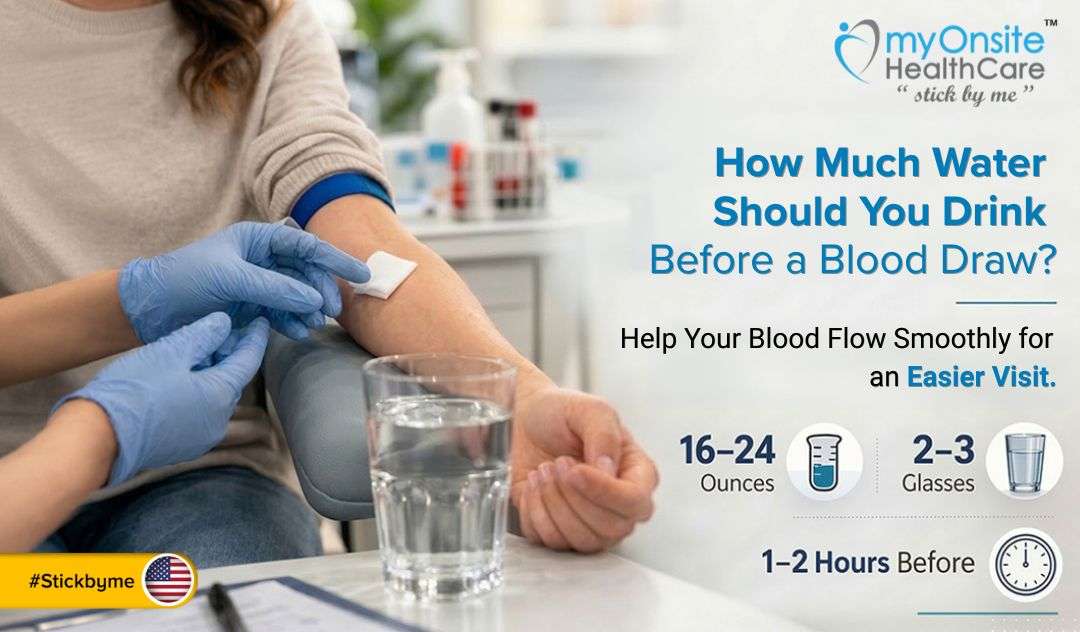
16–24 ounces of water (about 2–3 glasses) within 1–2 hours before a blood draw
You don’t need to drink it all at once. Just sip water gradually before your appointment.
In practice, that amount is typically enough to keep circulation steady and help the sample collect without much trouble.
Why Hydration Helps With Blood Collection
Blood collection works best when circulation is steady and the body has enough fluid. When your body is well hydrated, blood tends to flow more steadily through your veins.
When those conditions are right, the collection usually goes much more smoothly.
Patients who arrive well hydrated often experience:
- Faster blood collection
- Fewer delays during the appointment
- A smoother overall visit
- Less need to reposition the needle
Hydration is one of the easiest ways to help your body prepare for lab testing. According to the CDC’s hydration guidance, getting enough water helps prevent dehydration and supports normal body function.
Timing Matters More Than Quantity
Many people remember to drink water only when they arrive at the clinic or lab.
Drinking a full bottle right before the appointment rarely changes much, since the body needs a little time to absorb fluids.
Instead, try this simple timeline:
| Time Before Test | Hydration Tip |
|---|---|
| Night before | Drink water normally during the evening |
| 1–2 hours before | Drink 2–3 glasses of water |
| Right before | Small sips are fine |
This gradual approach helps your body absorb fluids properly and keeps your circulation stable.
Can You Drink Water If You’re Fasting?
Yes — in most cases.
Many blood tests require fasting, but plain water is almost always allowed and often encouraged.
Water does not interfere with most lab measurements and can help make sample collection easier.
If you’re unsure about your test instructions, you can learn more about how long you should fast before a blood draw.
For general preparation guidance, the MedlinePlus guide to lab tests also explains how medical tests are used and how patients can prepare.
Hydration Is Especially Helpful for At-Home Blood Draws
Home blood draw visits are becoming more common, particularly for patients managing chronic conditions or limited mobility.
In these situations, simple preparation beforehand can help the visit go smoothly.
At myOnsite Healthcare, mobile phlebotomists perform thousands of blood collections in patients’ homes each year. One thing patients often ask before a visit is whether drinking water will make the process easier — and in most cases, it does.
If you’re curious about other preparation strategies, you may also find these tips helpful on how to make veins bigger for a blood draw before testing.
Patients who stay hydrated often experience faster collections and a more comfortable visit overall.
Hydration and Lab Accuracy
Hydration can influence more than just the draw itself. It may also affect how some lab values appear.
When someone is dehydrated, the blood may appear slightly more concentrated, which may affect how some markers are interpreted.
If you’re interested in the science behind that, here’s a helpful explanation of which blood tests indicate dehydration and how fluid balance can influence lab results.
Research highlighted by the National Institutes of Health on hydration and healthy aging also points to the broader health importance of staying well hydrated.
A Few Extra Preparation Tips
Staying hydrated helps the most, but a few simple habits can also make the visit smoother:
- Wear clothing with sleeves that roll up easily
- Arrive relaxed and take slow breaths during the draw
- Avoid alcohol the night before testing
- Follow any specific instructions included with your lab order
These small steps help make the appointment easier for both you and your phlebotomist.
The Bottom Line
Getting ready for a blood test is usually pretty simple.
Just remember one simple guideline:
Drink about 2–3 glasses of water within the hour or two before your blood draw.
Drinking a little water beforehand often helps the collection go more smoothly.
And when lab work is done right at home — something services like home blood draw services make possible for patients across the country — a little preparation beforehand can make the visit even more convenient.