
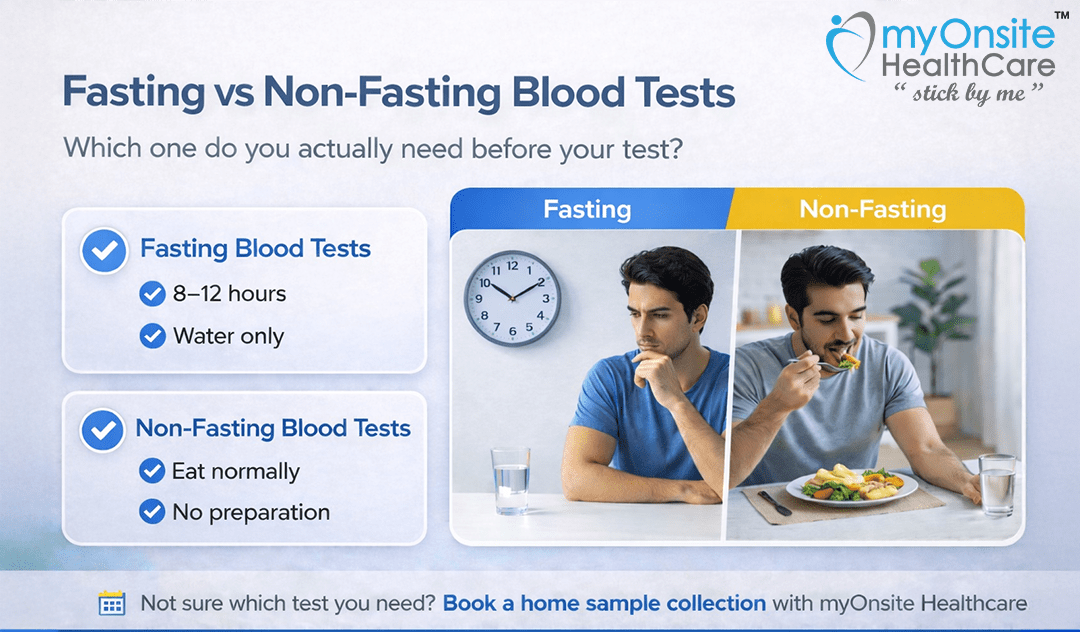
“Do I need to fast for this test?” might be the most common lab question ever — and for good reason. Some tests need fasting to be accurate, while many others don’t.
This guide helps you understand whether fasting is needed for your test. If you want a full fasting-prep guide (including exact fasting hours), see How Long Should You Fast Before a Blood Draw?.
What Does Fasting Mean?
For most blood work, fasting means:
- No food for 8–12 hours
- Water is allowed
- Avoid coffee, tea, juice, gum, or snacks unless your doctor says otherwise
Fasting instructions can vary slightly depending on the test, which is why trusted medical sources like MedlinePlus fasting blood test guidelines recommend confirming preparation details ahead of time.
If you’re unsure, the lab or your provider can confirm your prep.
Why Fasting Matters for Some Tests
Certain markers change right after you eat. If you eat before those tests, results can look higher or lower than your true baseline.
The two biggest meal-sensitive groups are:
- Blood sugar (glucose)
- Blood fats (triglycerides / parts of a lipid panel)
According to the American Diabetes Association’s guidance on blood glucose testing, fasting is still important for certain glucose and triglyceride measurements to ensure accurate baseline results.
That’s why fasting matters — it helps your provider interpret results correctly.
Common Tests That Usually Require Fasting
Your doctor may ask you to fast for:
- Lipid panel / triglycerides
Food can raise triglycerides for hours. Fasting gives a cleaner reading. - Fasting blood glucose
Used to check for diabetes or pre-diabetes. Eating beforehand can distort the number.
Some metabolic panels
Depending on what your doctor is investigating, they may want fasting to reduce variability.
Common Tests That Don’t Require Fasting
Many labs today are non-fasting by default, including:
- CBC (complete blood count)
- Thyroid panels
- Kidney & liver function tests
- A1C for diabetes monitoring (reflects ~3 months average, no fasting needed)
So if your test is in this category, you can eat normally unless told otherwise.
Quick Comparison Table
| Test | Fasting Needed? | Why? |
| Lipid panel / triglycerides | Often yes | Meals raise triglycerides |
| Fasting glucose | Yes | Food spikes glucose |
| A1C | No | Long-term average glucose |
| CBC | No | Not meal-sensitive |
| Thyroid tests | No | Meals don’t meaningfully alter results |
Always follow your doctor’s specific instructions.
What If You Accidentally Ate?
First — don’t panic. It happens all the time.
Here’s what to do:
- Let the lab staff know before your draw
- They’ll check if the test can still be done
- If fasting is essential, they may reschedule
This quick honesty can save you from inaccurate results or having to retest.
Myth-Busting: Common Fasting Misunderstandings
“Water breaks the fast.”
False. Water is encouraged — it keeps you hydrated and makes the draw easier.
“Black coffee is fine.”
Not always. Coffee can affect blood sugar and hydration levels. Skip it unless your doctor clears it.
“Chewing gum doesn’t count.”
Actually, it can. Gum activates digestion and insulin response — not ideal for fasting tests.
Tips to Make Fasting Easier
- Schedule your test early in the morning
- Drink water during your fasting window
- Avoid alcohol and large meals the night before
- If you’re diabetic, elderly, pregnant, or have medical conditions — check with your provider first
After your draw, it helps to eat something light — see What to Eat After a Blood Draw for simple recovery tips.